Your baby’s first birthday is an exciting milestone. Between the first words, first steps, and first birthday celebration, there is a lot for parents to keep track of. But there is another important milestone that shouldn’t be overlooked: your child’s first dental visit.
The American Academy of Pediatric Dentistry (AAPD) recommends that children establish a dental home by 12 months of age. An early dental visit gives parents an opportunity to learn how to care for their child’s developing teeth while allowing a pediatric dentist to evaluate their child’s oral health, identify potential concerns, and establish a plan for prevention.
For families in Leesburg, Lansdowne, Ashburn, Brambleton, Sterling, and throughout Loudoun County, seeing a pediatric dentist early can help your child develop healthy habits and become comfortable with dental care from the very beginning.
When Should My Child First See a Dentist?
One of the most common questions new parents ask is:
“When should my baby first go to the dentist?”
The answer is earlier than many parents expect.
You don’t need to wait until your child has a mouth full of teeth.
You also don’t need to wait until your child can sit perfectly still in a dental chair.
The first dental visit is about much more than looking for cavities. It is an opportunity to establish a relationship with your child’s dental team and give parents practical information they can use at home.
Why Does a 1-Year-Old Need a Dentist?
You might be wondering why your child needs a dentist so early, especially if they only have a few teeth.
The answer is prevention.
Your child’s baby teeth are important for chewing, speech development, maintaining space for permanent teeth, and healthy oral development. At the same time, newly erupted teeth can develop cavities.
Cavities Can Develop in Baby Teeth
One of the most common misconceptions about baby teeth is:
“They’re just baby teeth. They’re going to fall out anyway.”
While baby teeth are temporary, they still matter.
Untreated tooth decay can cause pain, infection, difficulty eating, and other complications. Establishing a dental home early gives your pediatric dentist an opportunity to identify risk factors and help your family prevent problems before they become more serious.
The goal isn’t to wait until your child has a cavity.
The goal is to help prevent one.
What Is a Dental Home?
You may hear your pediatric dentist use the term dental home, but what does that actually mean?
A dental home is an ongoing relationship between your child, your family, and your dental provider.
Establishing a dental home early allows your pediatric dentist to:
- Monitor your child’s dental development
- Assess cavity risk
- Provide preventive care
- Discuss oral hygiene
- Discuss nutrition and feeding habits
- Provide age-appropriate guidance for caring for your child’s teeth
- Address oral habits such as pacifier use and thumb-sucking
- Discuss dental injury prevention
- Answer parents’ questions
- Treat dental problems when they arise
In other words, the first dental visit isn’t simply a “checkup.”
It is the beginning of your child’s ongoing dental care.
What Happens at a 1-Year-Old’s Dental Visit?
Parents sometimes worry that their one-year-old won’t cooperate during a dental examination.
That’s completely normal.
A one-year-old isn’t expected to behave like a five-year-old. Infants and toddlers are curious, active, and often uncertain about unfamiliar environments.
At an Age 1 visit, the pediatric dental team focuses on making the experience appropriate for your child’s age and development.
Depending on your child’s comfort and cooperation, the visit may include:
A Gentle Oral Examination
The pediatric dentist will examine your child’s teeth, gums, and other areas of the mouth.
The dentist will look for signs of tooth decay, developmental concerns, tooth eruption issues, and other potential problems.
Monitoring Tooth Development
Your child’s teeth don’t all appear at once, and every child develops at their own pace.
A pediatric dentist can monitor tooth eruption and development over time and identify concerns that may warrant additional observation or treatment.
Oral Hygiene Guidance
Parents will receive guidance about caring for their child’s teeth at home, including brushing techniques and age-appropriate toothpaste recommendations.
Nutrition and Feeding Guidance
What your child eats and drinks can have an important impact on their risk for tooth decay.
Your pediatric dentist may ask about:
- Milk and formula
- Breastfeeding
- Juice
- Water
- Snacks
- Frequency of eating
- Bottles and cups
- Sugary foods and beverages
This isn’t about judging parents. It’s about understanding your child’s individual situation and finding practical ways to protect their teeth.
Discussion of Oral Habits
The first years of life are also an important time to discuss habits such as pacifier use and thumb-sucking.
The AAPD recommends using the early dental home as an opportunity for anticipatory guidance regarding these habits.
Questions and Personalized Guidance
Perhaps the most valuable part of the first visit is the opportunity to ask questions.
Every child is different, and parents often have questions about teething, brushing, eating, pacifiers, tooth eruption, and what to expect as their child’s smile develops.
Your pediatric dentist can help you understand what is normal for your child’s age and when something may deserve closer attention.
What If My Baby Cries at the Dentist?
This is one of the biggest concerns parents have before an infant’s first dental appointment.
It’s okay if your child cries.
Crying doesn’t mean the visit was unsuccessful.
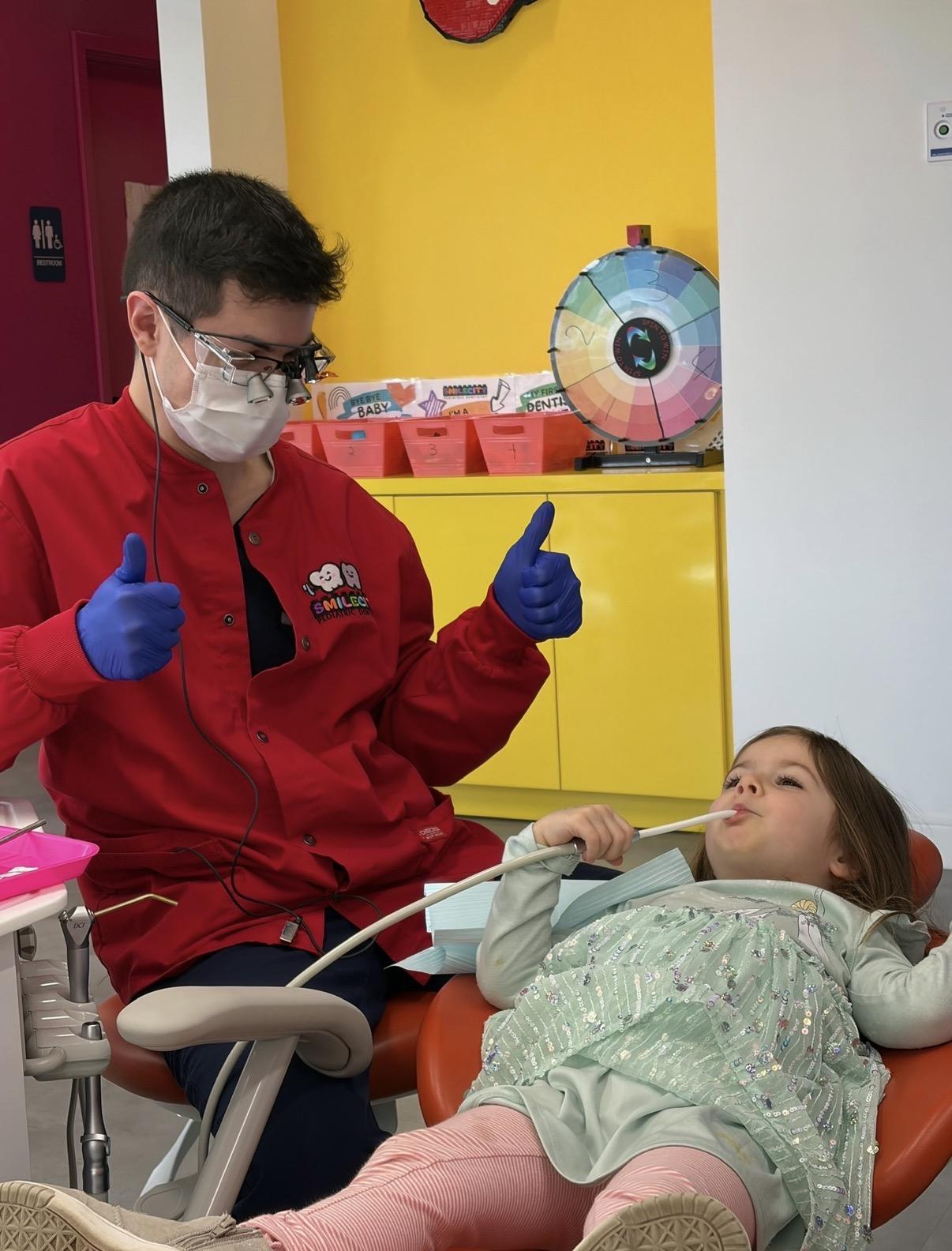
One of the goals of early pediatric dental care is simply to introduce your child to the dental environment and begin establishing a relationship with the dental team.
Some children will happily open their mouths. Others may be hesitant. Some may cry.
That’s normal.
Pediatric dental teams are accustomed to working with children at different developmental stages. Our goal is to create positive experiences and build familiarity over time.
A child’s first visit doesn’t have to be perfect.
It simply has to be a first step.
How Should I Care for My Baby’s Teeth?
Once your child’s teeth begin to appear, establishing a consistent oral hygiene routine is important.
Parents should take an active role in brushing because young children do not yet have the coordination necessary to effectively clean their own teeth.
Your pediatric dentist can recommend an appropriate toothbrush, toothpaste, brushing technique, and routine based on your child’s age and individual needs.
If you’re unsure about how to brush your baby’s teeth or how much toothpaste to use, your child’s first dental visit is a great time to ask.
What Does Diet Have to Do With Cavities?
A child’s diet is an important part of maintaining a healthy smile.
It’s not only what your child eats that matters. How frequently the teeth are exposed to sugary foods and drinks can also affect cavity risk.
Frequent snacking and sipping sweetened beverages throughout the day can expose teeth repeatedly to conditions that favor tooth decay.
For many families, simple changes can make a meaningful difference.
Your pediatric dentist can discuss your child’s eating and drinking habits and provide recommendations that fit your family’s routine.
Does My Baby Need to See a Dentist If They Don’t Have Many Teeth?
Yes.
You don’t need to wait until your child has a complete set of baby teeth.
The purpose of establishing a dental home during infancy is preventive care and anticipatory guidance, not simply treating cavities.
Even if your baby only has a few teeth, parents can benefit from guidance regarding:
- Oral hygiene
- Tooth eruption
- Teething
- Feeding practices
- Oral habits
- Dental injury prevention
- Cavity prevention
- Future dental visits
Parents sometimes ask whether their child needs to see a pediatric dentist or whether they can simply visit a general dentist.
Why Choose a Pediatric Dentist for Your Child?
Many dentists provide excellent care for children. Pediatric dentists, however, receive specialized education and training focused specifically on the oral health, development, behavior, and unique needs of infants, children, and adolescents.
Pediatric dentistry involves much more than treating cavities.
A pediatric dentist considers:
- Developing teeth and jaws
- Growth and development
- Behavior and communication
- Preventive dentistry
- Dental anxiety
- Oral habits
- Dental trauma
- Children’s unique treatment needs
The environment can matter, too.
Children often respond differently when they are in an office designed specifically for them and surrounded by a team accustomed to treating young patients.
Looking for a Pediatric Dentist Near Leesburg, Lansdowne, or Ashburn?
If you’re searching for a pediatric dentist in Leesburg, Lansdowne, or Ashburn, SmileCity Pediatric Dentistry welcomes families from throughout Loudoun County.
Our office is conveniently located for families from Leesburg, Lansdowne, Ashburn, Brambleton, Sterling, and surrounding communities.
For many parents, finding a pediatric dentist isn’t just about location. You want a dental office where your child can feel comfortable, where the team understands young children, and where you can get clear answers to your questions.
That’s exactly what we strive to provide at SmileCity.
Why Families Choose SmileCity Pediatric Dentistry
At SmileCity Pediatric Dentistry in Leesburg, VA, we believe children deserve dental care designed around their needs.
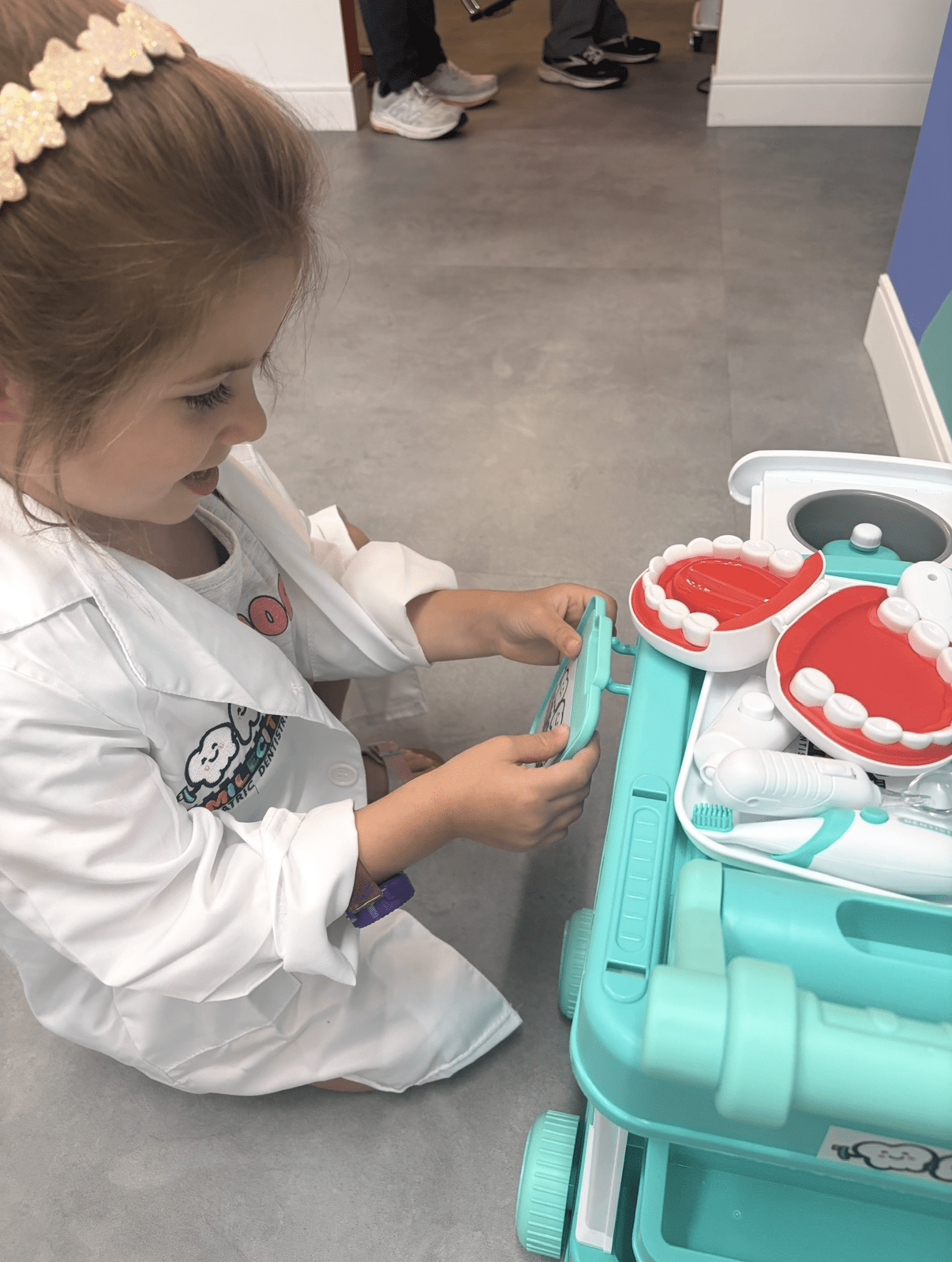
Our office was created with kids in mind. From our LEGO-themed environment and play areas to our approach to pediatric dental care, we want children to feel comfortable from the moment they walk through the door.
For a first visit, our goal isn’t to overwhelm your child.
We want to introduce them to the dental office in a positive, age-appropriate way while giving parents the information they need to care for their child’s smile at home.
Whether you’re bringing in your baby for their first dental visit, your toddler for their first cleaning, or an older child for ongoing preventive care, we’re here to help your family establish a comfortable dental home.
How Often Should My Child See the Dentist?
After establishing a dental home, your child’s pediatric dentist will recommend an appropriate schedule based on their oral health and individual risk factors.
Regular preventive visits allow the dental team to:
- Monitor dental development
- Reinforce healthy oral hygiene habits
- Evaluate cavity risk
- Identify problems early
- Continue age-appropriate preventive education
The appropriate interval can vary from child to child.
Your pediatric dentist can recommend a schedule based on your child’s individual needs.
What If My Child Already Has a Cavity?
If you’ve noticed a white spot, brown spot, discoloration, chipped tooth, or visible cavity, don’t wait for your child’s next routine appointment.
An early evaluation allows your pediatric dentist to determine what is happening and discuss appropriate options.
If your child develops dental pain, swelling, or other concerning symptoms, prompt evaluation is particularly important.
Give Your Child a Healthy Start
Your child’s first birthday is a great time to establish a dental home.
You don’t need to wait until your child can sit perfectly still.
You don’t need to wait until all of their baby teeth have erupted.
And you don’t need to wait until something hurts.
The purpose of an early pediatric dental visit is to prevent problems, monitor development, educate parents, and help your child become comfortable with dental care.
For families in Leesburg, Lansdowne, Ashburn, Brambleton, Sterling, and throughout Loudoun County, SmileCity Pediatric Dentistry is here to help your child’s smile get off to a healthy start.