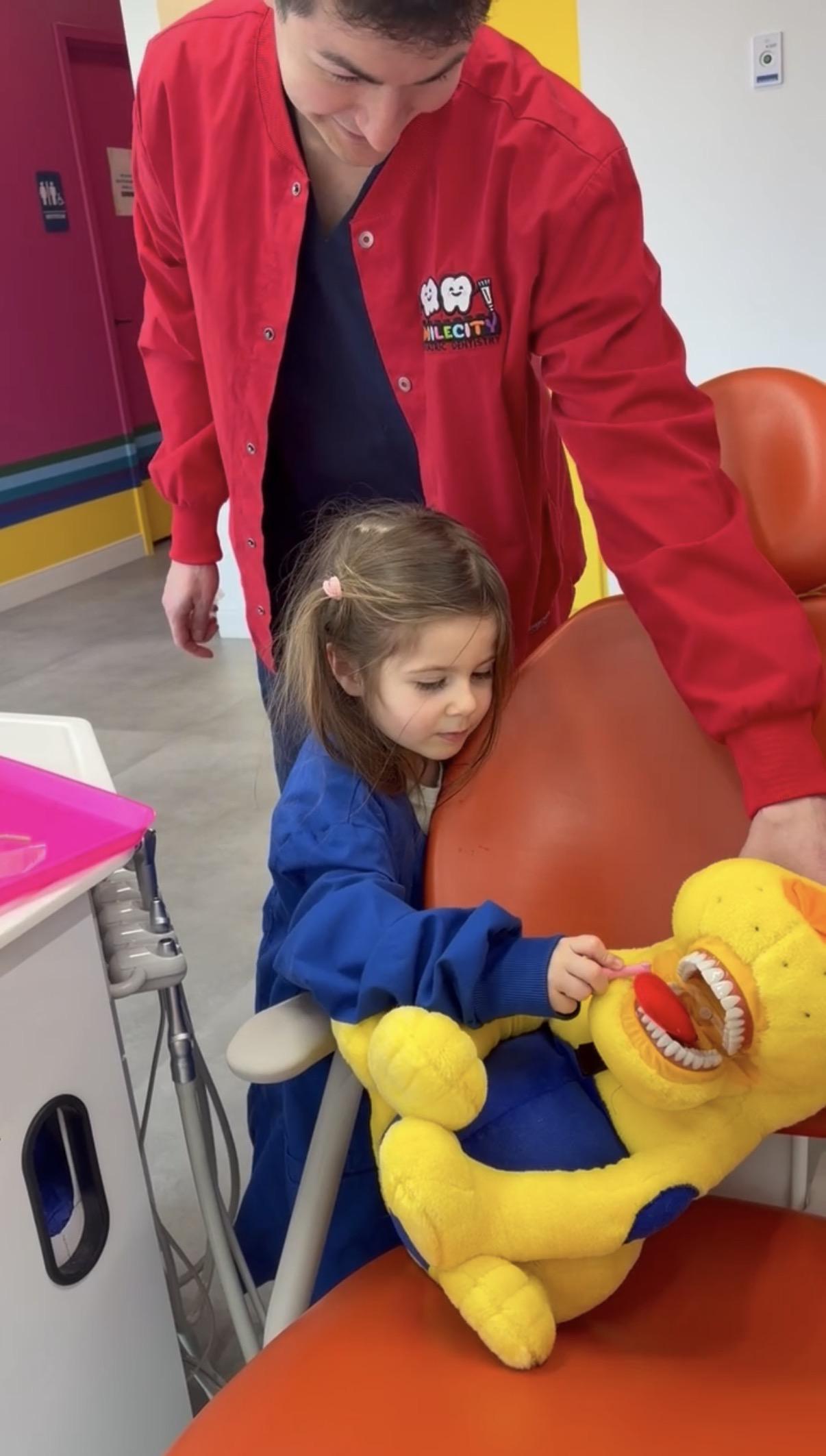

If you’re a parent in Leesburg, VA (or surrounding areas of Leesburg, Lansdowne, Ashburn, and greater Loudoun County), you’ve probably found yourself asking: “When will my child’s teeth come in? When will they lose their baby teeth? When do those molars come in?”
At SmileCity Pediatric Dentistry we believe educating parents is one of the best ways to promote healthy smiles — from first bites to braces (or beyond). Below is a dentist-approved, parent-friendly guide that covers everything you need to know about your child’s tooth-development timeline.
Baby (Primary) Teeth: When They Typically Come In
Children’s baby teeth (also called primary or deciduous teeth) do not actually pop in all at once. Instead, they emerge gradually — usually starting around 6 months of age.
By the time your child is about 20-30 months they typically have a full set of 20 baby teeth (10 on top, 10 on bottom).
Keep in mind: every child is unique. Some may get baby teeth slightly earlier, others a bit later — and that can be totally normal.
When and How Do Kids Lose Their Baby Teeth?
Around age 6, many children begin losing their baby teeth, making room for their adult (permanent) teeth.
The first teeth to go are usually the bottom front teeth (lower central incisors), followed soon after by the top front teeth (upper central incisors).
From there, over the next several years, the rest of the baby teeth — canines, molars, lateral incisors — will gradually be replaced by permanent teeth. By around age 12 to 13, most kids have lost nearly all their baby teeth.
Permanent Teeth — What to Expect (Including Molars)
Permanent teeth begin erupting as early as age 6, starting with the first “adult” molars (called first permanent molars) — and those are special, because they don’t replace any baby teeth; they just emerge behind the existing baby teeth.
Concurrent with the eruption of the 6 year molars, the lower incisors will begin to fall out at around 6-7 years old. By the age of 10 years old, all 8 incisors are expected to be erupted. Canines on the lower arch are expected to erupt at around 9 years old, while the top canines are expected to erupt at around 11-12 years old. Lastly, the baby molars will typically exfoliate between the ages of 10-12 years old.
And for many — though not all — adolescents or young adults: third molars (wisdom teeth) may come in during the late teens to early 20s.
Why Following This Timeline (and Regular Dental Visits) Matters
Baby teeth aren’t “less important” just because they come out. They play a critical role in speech development, chewing, guiding permanent teeth into the right place, and helping shape your child’s jaw and facial structure.
Permanent first molars are key. These “six-year molars” often emerge without replacing anything — if they slip by unnoticed, parents might not realize their child now has extra teeth sitting far back in their mouth. These molars also serve as important indicators that help pediatric dentists at SmileCity predict the future growth and development of your child’s teeth and jaws. Monitoring these milestones helps ensure permanent teeth come in properly aligned and are maintained with proper oral hygiene.
Early or delayed tooth eruption is often normal — but it’s good to check. Because timing varies from child to child, keeping up with regular dental checkups and cleanings ensures that any potential issues (like overcrowding, delayed emergence, or jaw-growth concerns) are caught and addressed early.
A Note to Leesburg Parents — How SmileCity Pediatric Dentistry Can Help
At SmileCity Pediatric Dentistry, located right here in Leesburg, VA, we:
- Use tools like growth charts and — when necessary — digital X-rays to track your child’s dental development.
- Monitor the eruption of both baby and permanent teeth to catch early signs of crowding or alignment issues.
- Provide guidance on oral hygiene, teething comfort, and when to expect — and celebrate — those milestone tooth events.
If you’re ever unsure about your child’s dental development — or just want peace of mind — we’re here for you.
Final Thoughts
Every child is unique — and so is their “tooth schedule.” While most children follow the general patterns above, variations are common and often perfectly normal. That said, knowing the typical ages and stages of tooth eruption and loss can give you confidence — and help you recognize when it might be time to check in with a pediatric dentist.
If you’re in or near Leesburg, VA and ready for guidance tailored to your child — or just want a friendly dental home for their growing smile — consider stopping by SmileCity Pediatric Dentistry located in Lansdowne Town Center.